
What the UK’s New Energy Changes Mean for Businesses in 2026
In 2026, buying electricity is only part of the story.
For UK businesses, the real opportunity now lies in how you use energy, when you use it and how much control you have over your site’s demand.
With the government accelerating renewable energy investment through the next Contracts for Difference auction (AR8) and the wider market rewarding businesses that can be flexible with their electricity use, energy has become more than a monthly cost, it can now become a strategic advantage.
Why the July 2026 CfD Auction Matters
The UK government has confirmed that the next Contracts for Difference auction, known as Allocation Round 8 (AR8), is expected to open in July 2026, with some related application windows opening earlier in May. This forms part of a wider push to strengthen UK energy security and bring more renewable power online faster.
Why this matters:
Faster Renewable Growth
More solar, wind and battery projects coming online should help improve long-term supply and reduce reliance on imported energy.
Better Project Momentum
Developers who were delayed in previous rounds may now have a faster route forward.
Grid Queue Reforms
Changes such as “first ready, first connected” are designed to prioritise projects that are genuinely ready to build, rather than those simply holding a place in the queue.
It’s Not Just About Generating Power Anymore
The biggest energy trend of 2026 is flexibility.
That means businesses are increasingly being rewarded for adjusting when they use electricity, using less during peak demand periods, or more when renewable generation is plentiful.
In simple terms:
- Use energy at the right time = lower costs
- Store cheap energy = use it later
- Help the grid balance supply = potential revenue
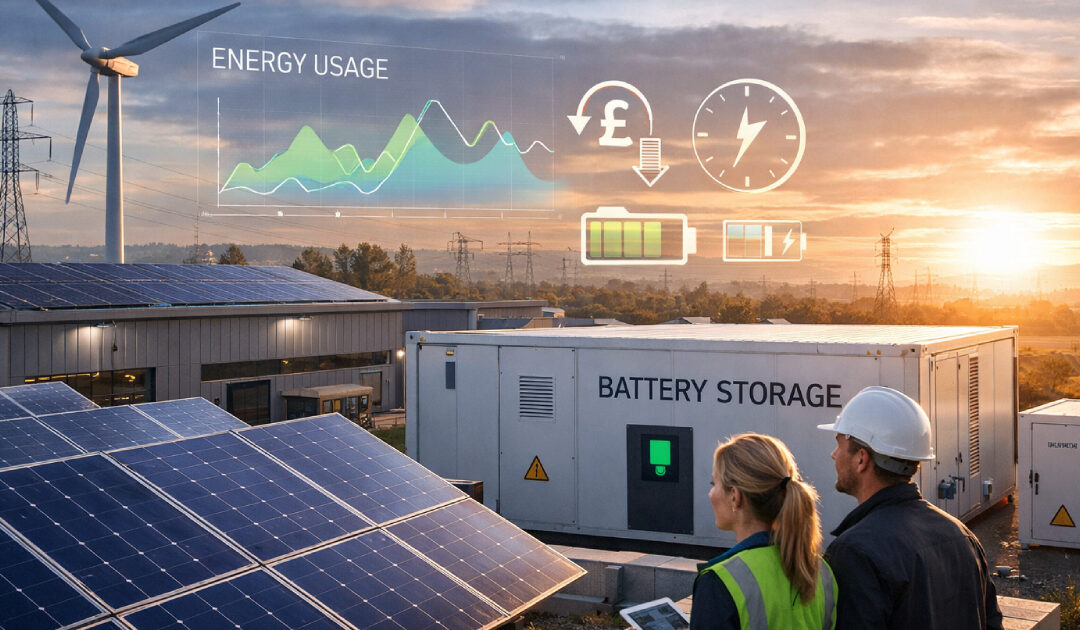
This is where commercial solar, battery storage and smart controls become incredibly valuable.
How Businesses Can Benefit
Reduce Expensive Peak-Time Usage
Electricity is often most expensive during busy evening periods when demand is high.
By shifting some usage outside peak times, or using battery power instead, businesses can significantly reduce charges.
Even moving a small portion of your load can create meaningful savings over a year.
Use Battery Storage to Buy Low, Use High
Battery storage allows you to:
- store low-cost electricity
- store surplus solar power
- reduce imports during expensive periods
- potentially access grid support revenues
Instead of simply paying for power when you need it, you gain control over when and how you use it.
Make Solar Work Harder
Solar panels reduce imported electricity, but pairing them with batteries and smart controls can dramatically increase the value of that generation.
Rather than exporting excess power cheaply, you can store it and use it when electricity costs more.
Why This Matters Now
For many commercial sites, a growing share of energy bills now comes from charges beyond the wholesale electricity price, network costs, levies, balancing charges and policy costs.
That means businesses can no longer focus only on “unit rate per kWh”.
The bigger question in 2026 is:
How intelligently is your site using energy?
How Verdant Future Helps
At Verdant Future, we help businesses turn energy from a fixed cost into a controllable asset.
Our turnkey approach includes:
- Commercial solar design
- Battery storage modelling
- ROI forecasting
- Grid applications & G99 support
- Smart energy strategy
- Real-world savings analysis
Whether you want to reduce rising costs, improve resilience, or prepare for the next phase of the UK energy transition, the time to act is now.
Want to Know What Your Site Could Save?
A simple energy profile review can often reveal savings opportunities many businesses never knew existed.
If you shifted just part of your peak-time demand, how much could you save?
We’d be happy to show you.