
Many businesses know their energy bill.
Far fewer know how their energy is actually being used or where it may be wasted.
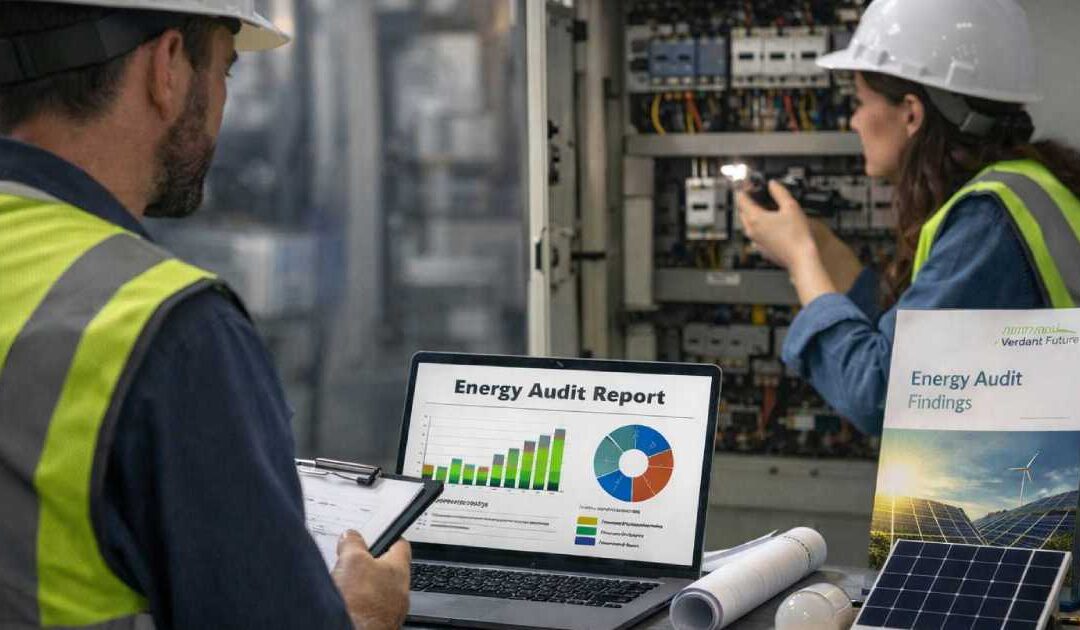
An energy audit provides a structured way to analyse how energy flows through your organisation. It examines buildings, equipment and operational processes to identify opportunities to reduce consumption, cut costs and improve efficiency.
For organisations with significant energy expenditure, it’s often the first step towards a smarter long-term energy strategy.
But what does the process actually involve?
1. Understanding Your Energy Use
The first stage of an energy audit focuses on building a clear picture of how your organisation currently consumes energy.
This typically involves reviewing:
- Electricity and gas bills
- Half-hourly consumption data (where available)
- Operating hours and energy demand patterns
- Major energy-using systems and equipment
This analysis helps establish a baseline for your energy consumption and highlights the areas responsible for the majority of energy use. In many professional audits, the aim is to identify the sources responsible for around 90% of total energy consumption.
Understanding this baseline is essential before meaningful improvements can be identified.
2. On-Site Survey and Building Assessment
Once the initial data review is complete, an energy specialist will normally conduct an on-site assessment of your premises.
During this inspection, the auditor reviews the systems and infrastructure that influence energy performance, such as:
- Heating, ventilation and air conditioning (HVAC) systems
- Lighting systems and controls
- Building insulation and fabric
- Windows, doors and air leakage points
- Industrial equipment or machinery
- Operational processes that consume significant energy
Walk-through surveys often identify inefficiencies that aren’t obvious from energy bills alone, such as outdated equipment, poor insulation or inefficient lighting systems.
3. Data Analysis and Energy Mapping
Once site data has been collected, it is analysed to understand how energy moves through the organisation.
This stage may involve:
- Identifying peak demand periods
- Mapping energy consumption across different systems
- Benchmarking performance against similar facilities
- Assessing equipment efficiency
- Highlighting operational behaviours that affect energy use
The goal is to pinpoint where the biggest opportunities for improvement exist.
Energy audits don’t just highlight problems, they prioritise improvements according to the most cost-effective energy saving opportunities.
4. Recommendations and Improvement Opportunities
The final stage of the audit is the delivery of a comprehensive report outlining practical recommendations.
These may include:
- Upgrading inefficient lighting systems
- Improving insulation or building fabric
- Optimising HVAC systems
- Installing better energy controls or monitoring
- Adjusting operational processes
- Integrating renewable energy solutions such as solar generation or battery storage
The recommendations are normally prioritised according to:
- expected cost savings
- implementation costs
- operational impact
- return on investment
This allows organisations to make informed, strategic decisions about where to focus their energy improvements.
Why Energy Audits Matter for Businesses
Energy costs continue to be one of the most significant operational expenses for many organisations.
Yet research suggests that a meaningful proportion of energy consumption in commercial buildings is lost through inefficiencies or outdated systems.
An energy audit helps businesses:
- uncover hidden energy waste
- reduce operational costs
- support ESG and sustainability targets
- improve building performance
- identify opportunities for renewable energy integration
Most importantly, it provides clarity, turning complex energy data into a practical roadmap for improvement.
How Often Should Businesses Carry Out an Energy Audit?
For many organisations, an energy audit is not a one-off exercise but part of an ongoing energy management strategy.
Energy usage within a business changes over time as buildings evolve, equipment is upgraded and operational demands shift. For this reason, many organisations review their energy performance every few years to ensure they are still operating efficiently.
In the UK, some larger organisations are required to carry out energy assessments under schemes such as the Energy Savings Opportunity Scheme (ESOS), which requires qualifying businesses to review their energy use every four years.
Even where it isn’t mandatory, conducting periodic energy audits allows businesses to:
- identify new efficiency opportunities
- monitor the effectiveness of previous improvements
- adapt to changing energy prices
- plan future investments in renewable energy technologies
Regular reviews ensure your organisation continues to operate as efficiently as possible in an increasingly energy-conscious business environment.
How Much Money Can a Commercial Energy Audit Save?
One of the most common questions businesses ask is simple: how much could we actually save?
While every organisation is different, studies across commercial buildings regularly show that energy audits can identify efficiency improvements capable of reducing energy consumption by 10–30% when recommendations are implemented.
These savings can come from a variety of improvements, including:
- upgrading inefficient lighting systems
- optimising heating and cooling systems
- improving building insulation
- introducing better monitoring and controls
- identifying opportunities for renewable energy generation
For businesses with substantial annual energy costs, even relatively small efficiency improvements can translate into significant long-term financial savings.
In many cases, the insights gained from an energy audit help organisations prioritise investments that deliver the strongest return on investment.
Are Energy Audits Mandatory in the UK?
Not all businesses are legally required to carry out energy audits, but some larger organisations must comply with government schemes designed to improve national energy efficiency.
One of the most notable is the Energy Savings Opportunity Scheme (ESOS), which applies to large UK companies that meet certain criteria relating to employee numbers or turnover.
These organisations must assess their energy use across buildings, transport and industrial processes and identify opportunities for efficiency improvements.
For smaller and medium-sized businesses, energy audits are generally voluntary but strongly encouraged.
Even without regulatory requirements, many organisations choose to undertake energy audits because they:
- reduce operational costs
- improve sustainability credentials
- support ESG and CSR commitments
- strengthen resilience against volatile energy prices
Increasingly, businesses see energy audits not simply as a compliance exercise but as a strategic tool for improving efficiency and long-term competitiveness.
How Verdant Future Can Help
At Verdant Future, our energy audits are designed not just to analyse your current position but to unlock opportunities for long-term energy efficiency and resilience.
By combining detailed technical analysis with a practical understanding of commercial energy systems, we help organisations:
- understand where their energy is going
- identify realistic cost-saving opportunities
- develop a strategic energy roadmap
- explore renewable generation and battery storage solutions
For businesses with significant energy costs, a professional audit often becomes the starting point for transformational improvements in energy performance.